HIGHLIGHTS:
- The era of the mass audience has permanently ended. Insights from StreamTV 2026 indicate a transition from a unified monoculture toward “feudal media,” a landscape where unreachable audiences remain unaware of your brand’s existence.
- Existing infrastructure remains inadequate for this level of fragmentation. Crucial elements such as measurement, discovery, and metadata continue to serve as an unstable basis for industry development.
- Fragmentation extends beyond viewership to operational hurdles. Many streaming entities persist with disjointed workflows, often managing localization through more than ten different agencies with quality control treated as a mere final addition.
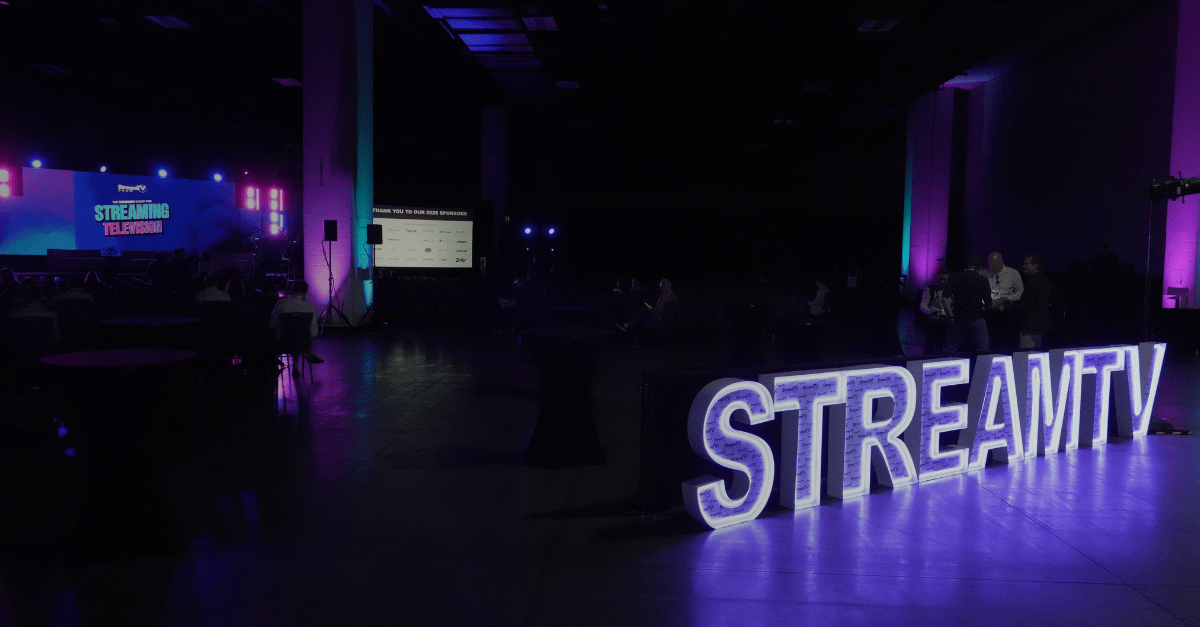
At StreamTV in Denver this June, streaming and entertainment executives came together to assess where the industry is headed. The consensus was unmistakable: the mass audience isn’t coming back. Fragmentation is the new normal, and the winners will be those who build deep, multichannel relationships with audiences wherever they are.
Alan Wolk of TVREV gave the diagnosis its sharpest name. We’ve left the era of monoculture, the “Roman Empire” of shared TV and gatekeepers, for “feudal media”: self-contained algorithmic bubbles, with influencers as new royalty and cross-pollination difficult if not nurtured. The most alarming line: the audiences you fail to reach aren’t only underserved; they’re “completely oblivious you exist.”
Evan Shapiro’s keynote at the Media Universe Summit supplied the economic framework behind that shift. Value today is driven by loyalty, community, and fandom – not reach or frequency. This is what the speaker called the “Affinity Economy.”
The data underscored the point. Among consumers under 55, YouTube commands the most attention and hours watched, while Disney is the only traditional media company to crack the top four. The implication is clear: reach alone is no longer enough. Success depends on earning lasting affinity – one community, one niche, one market at a time.
FRAGMENTATION OUTPACED INFRASTRUCTURE
The industry has clearly accepted fragmentation as reality. The dialogue has shifted from acknowledging its existence to determining how to plan for it. However, the existing infrastructure remains inadequate.
The challenge of discovery persists. As one panelist strikingly noted, failing to resolve this across platforms and operating systems means “the alternative is death”. With distribution options becoming virtually limitless, static benchmarks have lost their relevance. Furthermore, the foundational metadata is unreliable; describing it as “not as solid as it could easily be” is a significant understatement. To move forward, the industry must establish superior standards for content classification, packaging, and distribution.
On the platform side, serving a NASCAR ad to a PBS Masterpiece viewer is the failure mode everyone recognizes. It leads to disappointment and churn. Per Antenna’s subscription data, premium SVOD churn has hovered around 5% monthly, and collective subscriber retention fell to roughly 15% over two years, even as cancellations climbed faster than new sign-ups. Consumers can’t sustain ten to twelve subscriptions. Free, ad-supported viewing is resurging in the gap.
The base requirement for the industry is now widespread distribution. Success today depends on excelling in core areas such as measurement, discovery, metadata, and marketing localization. When companies overlook these fundamental layers, the negative impact on the brand continues to grow.
FOCUS ON ECOSYSTEM, NOT JUST ASSETS
The sessions on mergers and acquisitions (M&A) and the creator economy demonstrated how to capitalize on affinity as the modern industry currency. Rather than treating content as a series of disconnected touchpoints, it must operate as an integrated, cross-platform flywheel.
Projected to pull in upwards of $500 billion by 2030 across 207 million active creators, the maturing creator economy is moving toward diverse formats, higher production values, and exclusives. Platforms now recruit creators the way networks once developed TV talent, asking whether the work “already feels like television.” The durable IP isn’t a single video; it’s the audience relationship and the content that travels across YouTube, social, membership tiers, and originals.
The M&A sessions highlighted the cost of getting this wrong. Audiences are fans of shows, not networks, so consolidation tends to erode brand equity. The Fox+Roku agreement, should it finalize, represents a potential outlier. Many analysts view the move as intelligent because it prioritizes a data-and-distribution strategy over a simple catalog consolidation. The deal would integrate Fox’s portfolio – including Tubi, news, and live sports – with the connected-TV platform and Roku’s established relationships, which serve over 100 million streaming households worldwide.
Consolidation can be useful, but the deals that work purchase audience depth, not just a library. Stop thinking in assets, and start thinking in ecosystems. “Build kingdoms, not just shows,” as Wolk put it.
MARKETING LOCALIZATION MEANS ESSENTIAL ENGAGEMENT AND REAL RETENTION
This connects the overarching macro trend back to our core expertise at Wordbank. When audiences are split into distinct markets and algorithmic bubbles, being “available everywhere” lacks impact if the content doesn’t “feel native anywhere”; without that resonance, the message becomes mere noise.
That was the argument our CEO Lindsay Johnson, and Adapt CEO Justin Beaudin made in “The Localization Blind Spot: Hidden UX Barriers Killing Your International Growth,” moderated by Kirby Grines of The Streaming Wars.
When we surveyed industry execs, research revealed a stark industry imbalance: while over 90% of streaming executives prioritize international expansion, only about 3% view cultural nuance as a critical factor for success. This gap represents a major financial blind spot, arising when marketing localization is dismissed as a mere fulfillment task rather than a strategic growth engine. Modern streaming and CTV platforms function as comprehensive marketing ecosystems where metadata, synopses, trailers, and social assets are as vital to the user journey as dubbing and subtitling.
Operational efficiency is further hampered by vendor fragmentation. Some providers manage localization through more than ten separate agencies, resulting in isolated workflows and reactive quality control. This lack of cohesion leads to increased costs stemming from remediation, rushed delivery, and wasted time. To overcome these challenges, the industry must move beyond simply adding more vendors and instead embrace strategic ownership of the localization process.
Our work with Netflix is the proof point. Nearly a decade ago, the streaming giant was juggling multiple agencies at an 85% error-free rate: 15% constant remediation across thousands of assets. By centralizing around in-market creative talent, multi-stage data-driven workflows, and systems layered on top, we moved that to a 99% error-free rate sustained year over year.
On the topic of AI, Johnson and Beaudin pushed back on the technology, making everything “faster and cheaper.” The right starting point is better; the rest follows. AI unlocks the previously impossible, such as synthetic voice, voice cloning, facial reanimation, and scaled workflows, but only when human-anchored. The right order: people, process, then systems.
FINAL THOUGHT
Fragmentation is permanent, the unsolved work is infrastructure, and the unit of value is the cross-platform audience relationship. Marketing localization is the piece most brands underbudget, a retention lever core to strategy, hiding inside a cost line. Without smart ownership, even excellent content providers underperform. Fragmentation doesn’t make scale impossible; it makes undifferentiated scale worthless.
Our core goal is to provide our clients with a unique combination of scale, speed, and cultural IQ. We provide international marketing strategies and high-volume creative assets, ensuring that global experiences are truly resonant with local audiences rather than merely accessible.
For those whose strategic plans focus on global expansion, a recurring theme at StreamTV emerged: in today’s fragmented media landscape, are you built to feel at home in those markets, or just available in them?